Custom chassis fabrication means building or reworking a car’s frame or underbody structure around your vehicle and your goals, instead of bolting more power onto a frame that was never meant to carry it. It is the right call when a classic frame is too far gone, when an engine swap or restomod outgrows the original structure, or when a car needs a new stance, wheelbase or suspension geometry. It is also the part of a build where the quote can swing the most, so the smartest move is to commission it from a shop that handles the frame, body, wiring and suspension as one project. That is how we work at StreetWorks Auto in Phoenix, where custom fabrication sits alongside restoration and performance work in a single shop.
TL;DR
- Custom chassis work is for cars whose original frame can’t be saved or can’t support the power, suspension and stance you want.
- Fit matters more than looks: tube joints, weld sequence and measured diagonals decide whether the car drives straight for decades.
- Cost depends on scope (repair, new frame, full chassis), materials, suspension and drivetrain mounting, and everything that has to be rewired or re-plumbed afterward. Expect a written, itemized quote rather than a single number.
- Arizona registration and any racing sanctioning body set requirements you should settle before fabrication starts, not after.
- Phoenix heat is a design input for cooling, exhaust clearance and wiring routing, so tell your shop how and when you drive.
Table of Contents
- What custom chassis fabrication actually covers
- When your car needs it
- How a custom chassis build runs from design to installation
- Design choices that affect strength, weight and fit
- What custom chassis fabrication costs
- Arizona registration and racing rules to settle first
- Planning for Phoenix heat
- Getting your project started
- FAQ
- Sources
What custom chassis fabrication actually covers
The chassis is the structure everything else hangs from: engine, transmission, suspension, steering, body. On older body-on-frame cars and trucks that means a ladder frame. On unibody cars it means the floor pans, rails and crossmembers that act as the frame. “Custom fabrication” can mean anything along that range:
- Repair and reinforcement: replacing rusted or tweaked rails, adding crossmembers, boxing or stiffening a frame so it handles more torque.
- Modified frame: notching or C-notching for rear axle travel, new engine and transmission mounts, relocated suspension points.
- Frame or body swap: moving a body onto a different or new frame, which is how many restomods get modern handling under classic sheet metal.
- Full custom chassis: a new structure built to your wheelbase, track width, ride height and drivetrain, with the body fitted to it.
Most owners need something in the first three. A full scratch-built chassis is a larger commitment and usually belongs to one-off builds, race cars and projects where no donor frame exists.
When your car needs it
A few situations come up again and again with classic, muscle and performance cars:
The frame is compromised. Rust through the rails, old collision damage or botched earlier repairs. In dry Arizona many cars arrive with surprisingly clean frames, but cars that spent decades elsewhere often come in rotted at the rear spring perches and body mounts.
The power outgrew the structure. A car that left the factory with 200 horsepower may now be asked for 450 or more after an LS or Coyote swap. Torque twists the frame, loosens body mounts and ruins alignment unless the structure is stiffened or replaced.
The suspension geometry has to change. Coilover conversions, independent rear suspension, rack-and-pinion steering and big brakes all need mounting points the original frame doesn’t have. Adding them in the right places is fabrication, not bolt-on work.
You are building a restomod. The goal is a car that looks period-correct and drives like a modern one. That usually means a stronger frame, new mounts and a clean path for the engine, exhaust and wiring. Our restomod work is planned around the vehicle and the owner’s goals, with attention to drivability.
The car will compete. Drag, circuit and other sanctioned racing set minimum structure and safety rules, which we cover below.
How a custom chassis build runs from design to installation
The order matters, because mistakes made early are expensive to unwind later. Here is the sequence a well-run project follows.
1. Define the goal and the drivetrain
Before a single tube is cut, the shop needs to know what the car will be: weekend cruiser, show car, track car, daily driver. It also needs the engine, transmission, rear end, wheel and tire size, and the ride height you want. A 700-horsepower track build and a quiet cruiser with the same engine need different structures.
2. Measure and set the datum
Everything is measured from reference points on the car and the frame. Wheelbase, track width, suspension pickup points, engine position, steering rack location and body mount positions all get fixed on paper (or a model) first. Skipping this stage is how builds end up with a driveshaft angle that vibrates or a steering rack that bump-steers.
3. Choose materials and structure
Mild steel tube and plate is the common choice for street cars. Alloy steel is used where weight and strength matter more and where a sanctioning body allows it. Wall thickness, tube diameter and where you box or triangulate a section all change stiffness and weight. Heavier is not automatically stronger. Good design puts material where the loads go.
4. Fit, tack and check
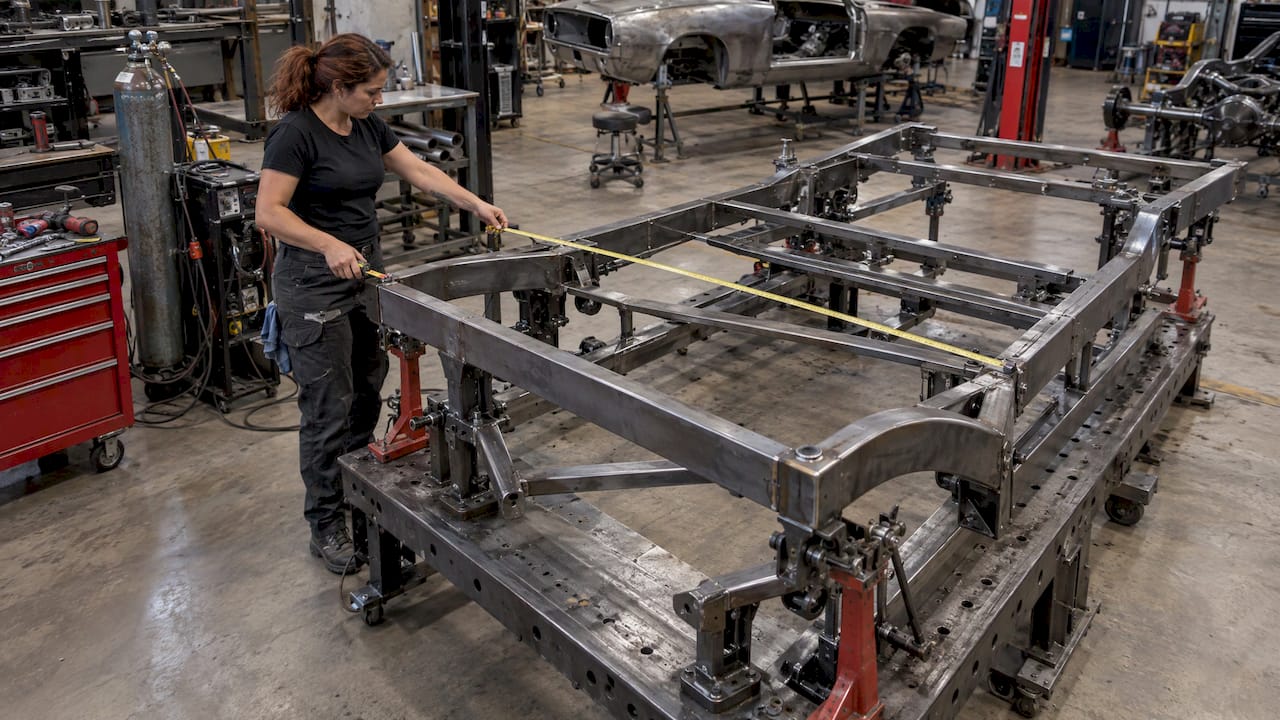
Engineering guidance for scratch-built frames calls for tube joints that fit with no gap larger than 1 mm, and for the whole assembly to be tacked and measured along the diagonals before final welding, according to an engineer’s step-by-step chassis guide. The same guide says the welding sequence should jump around the structure so heat spreads evenly, instead of finishing one corner at a time. Heat pulls steel, and a frame welded in the wrong order can leave the factory fixture square and come out of it twisted.
5. Final weld, finish and corrosion protection
Once the diagonals check out, the structure is fully welded, cleaned and coated. Powder coat or paint is not decoration here: bare steel rusts, and a chassis you can’t easily reach again deserves proper protection.
6. Install suspension, drivetrain, brakes and wiring
This is where a chassis becomes a car. Suspension, steering, brake and fuel lines, engine and transmission go in. The wiring has to be planned with the chassis, not added at the end: harness routes, battery location, fuse and relay placement and EFI power all depend on where things physically sit. Our chassis wiring work covers custom harnesses and EFI wiring for exactly that reason.
7. Align, test and road-prove
After assembly the car needs alignment, a check of ride height and driveline angles and real road testing. In Phoenix that includes how the car behaves in heat, with cooling and underhood temperatures in mind.
One project, one shop, from frame to wiring to suspension, means the person welding the mounts knows what engine and harness are going in. At StreetWorks Auto, frame and body swaps, wiring and chassis work and suspension upgrades are all part of the same offering, so those handoffs happen inside one shop instead of between three.
Design choices that affect strength, weight and fit
You don’t need to engineer the frame yourself, but you should understand the decisions you are paying for.
Tube size and wall thickness. Thicker walls resist bending but add weight. Racing rule books set minimums by vehicle weight. For example, the National Motorsports Safety Association’s circuit rules set roll cage tubing minimums that step up as vehicle weight increases, from 1.375 x .080 inch for cars up to 1,700 lbs to heavier sizes for cars at 2,700 lbs and up (NMSA circuit racing rules). Street cars have no such table, but the principle carries over: heavier cars and higher loads need more structure.
Triangulation and boxing. Triangles resist twisting where open rectangles don’t. Boxing an open C-channel rail can add stiffness without adding much weight.
Mounting points. Suspension geometry depends on where pickup points sit relative to each other. A few millimeters of error changes camber gain, roll center and bump steer.
Engine and transmission placement. Moving the engine back and low improves balance but affects steering clearance, oil pan fit and driveshaft angle. It also interacts with Arizona’s heat: more room around headers and radiator airflow keeps temperatures down.
Body fit. The chassis has to match the body. Door gaps, firewall position, floor height and body mount locations all have to line up, which is why the body and chassis are best planned together, particularly on a full vehicle restoration.
Ride height and clearance. Wheel and tire size, fender clearance, exhaust routing and driveway angles all come from the chassis design. Lowering a car on paper is easy. Making it clear a speed bump in Scottsdale is a design requirement.
What custom chassis fabrication costs
There is no honest flat price for a custom chassis, and anyone who quotes one without seeing the car is guessing. Cost is a product of scope. The work items that move the estimate most are:
| Cost driver | Why it moves the quote |
|---|---|
| Scope | Repairing a rail, swapping a frame and building a full chassis are different jobs by orders of magnitude |
| Starting condition | Rust, collision damage and earlier repairs add labor before new work begins |
| Materials | Tube size, wall thickness, mild vs. alloy steel and plate or fabricated crossmembers |
| Suspension and steering | Independent suspension, coilovers, rack-and-pinion and big brakes need custom mounts |
| Drivetrain | Engine and transmission mounts, tunnel changes, rear end and driveshaft work |
| Finish | Powder coat, paint and corrosion protection |
| Wiring and plumbing | Harness, fuel system, brake lines and cooling routed to the new layout |
| Body work | Fitting or modifying the body to sit properly on the new structure |
The other items that tend to surprise owners are the ones around the frame: the engine itself (our engine rebuilds are published at $2,500 to $6,000), brakes, wheels, wiring and cooling. The chassis is often one line in a larger build, so decide early whether you are pricing a chassis or a car.
How to read a chassis quote
When a quote lands, check that it spells out:
- What is included. Frame only, or frame plus mounts, suspension, steering and brakes.
- Who supplies parts. Whether you buy the suspension and drivetrain or the shop sources them, and what happens if a part you supplied doesn’t fit.
- How changes are handled. What happens to price and schedule if the engine, wheels or ride height change mid-build.
- What condition assumptions it makes. A quote written before the car is stripped is an estimate. Ask how hidden rust or damage is handled.
- Finish and protection. Whether coating or paint is part of the number.
- Wiring and plumbing. If those are separate, get them priced together so you see the total.
- Documentation. Photos, measurements and receipts for the major parts, which you may need for registration.
Plan a contingency on top of the estimate for the unknowns. Classic cars hide surprises behind paint and floor pans, and a buffer keeps a good build from stalling halfway.
Arizona registration and racing rules to settle first
These are safety and legal items, so check them before fabrication starts.
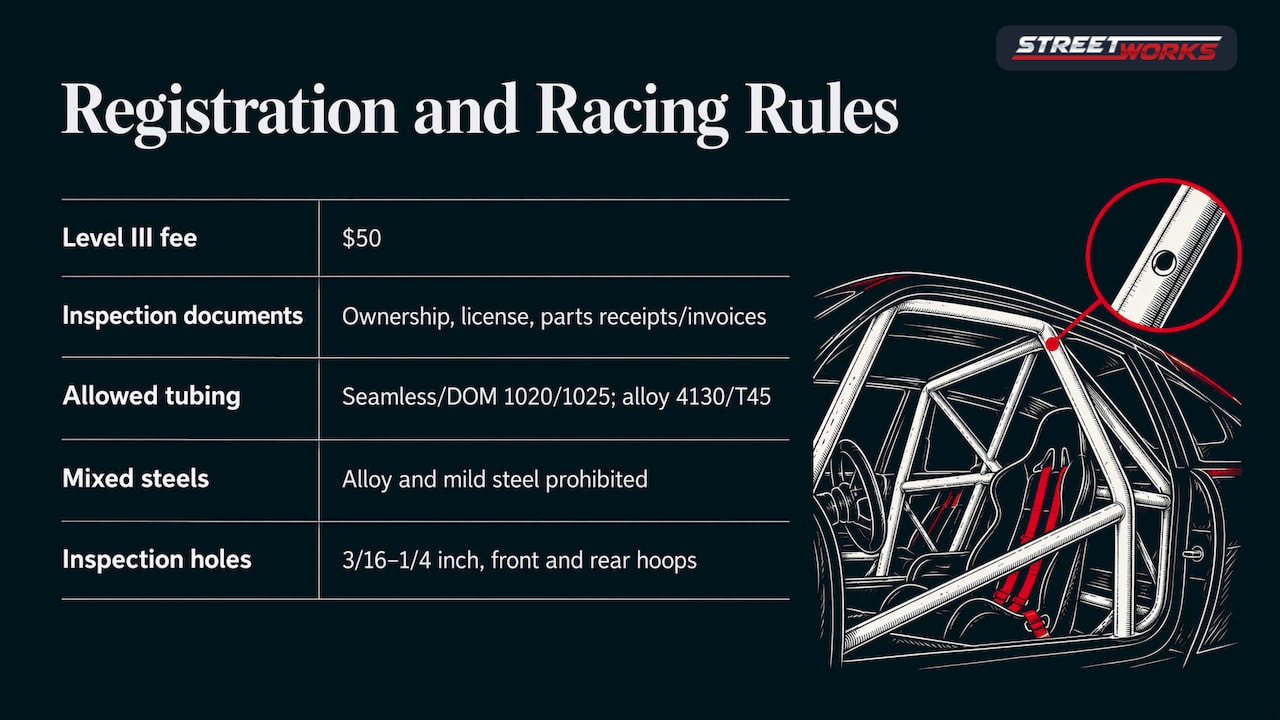
Registration and inspection. Arizona’s Motor Vehicle Division matches a vehicle’s VIN to its ownership documents and in some cases verifies the vehicle is equipped for highway use. For a rebuilt or heavily modified vehicle, owners typically need proof of ownership, a valid driver license and receipts or invoices for the component parts that were repaired or replaced, as ADOT’s vehicle inspection page lists. The higher inspection levels are done by a peace officer at ADOT locations by appointment, and the Level III fee is listed at $50. Keep every invoice and photo from the build, and confirm with ADOT which level your project falls under before you finish it.
Racing and sanctioning rules. If the car will run at a track, get the sanctioning body’s current rule book first. Roll cage and chassis rules specify material, tube size and inspection details. The NMSA’s circuit racing rules, for example, call for seamless or DOM mild steel tubing (SAE 1020 or 1025) or alloy steel (SAE 4130 or T45) for roll cage structures, prohibit mixing alloy and mild steel, and require a 3/16 to 1/4 inch inspection hole in the front and rear hoops so wall thickness can be verified (NMSA circuit racing rules). Other series have their own tables, so build to the one you will run.
Auctions and shows. If you plan to sell through an auction or enter judged shows, tell the shop up front. A modified frame changes how a car is classed and described, and our auction preparation and inspection work starts from knowing exactly what has been done to the car.
Planning for Phoenix heat
Desert driving punishes chassis and drivetrain packages. When you commission a chassis, say how and when you drive:
- Cooling space. Leave room for a larger radiator, fans and airflow. Engine swaps need this designed in, not squeezed in.
- Exhaust clearance. Keep headers and pipes away from fuel lines, brake lines and wiring. Summer pavement and underbody temperatures stack on top of exhaust heat.
- Wiring routing. Harnesses should run away from heat sources and sharp edges and be secured along the frame.
- Rubber and bushings. Heat and UV age suspension bushings and hoses faster, so material choice for those parts matters.
- Drivability. A car you can only enjoy in January is not finished. Gearing, cooling and ride quality should suit stop-and-go driving on a July afternoon.
Our approach is to plan modifications around the vehicle and the owner’s goals, with attention to Arizona heat and drivability, so those questions get answered at the design stage.
Getting your project started
If your classic, muscle car or performance build needs a stronger or different structure, start with a conversation about the goal, the drivetrain and the car’s current condition. StreetWorks Auto does custom fabrication, frame and body swaps, chassis wiring, suspension upgrades and engine swaps in one Phoenix shop, serving owners across Phoenix, Scottsdale, Mesa, Tempe, Chandler and Glendale. Projects are typically quoted and booked directly, so the quickest next step is to bring the car or your plan and get a quote built around it.
If you are earlier in the process and still deciding between a restoration, a restomod or a swap, our classic car restoration page explains how those projects are planned.
FAQ
Do I need a custom chassis for an LS or Coyote swap?
Not always. Many swaps work on the original frame with new engine and transmission mounts and some reinforcement. A custom or reinforced chassis becomes worth it when you are adding significant power, changing suspension geometry or moving the engine position. Describe your power goal and the car, and the shop can tell you which route fits.
How long does custom chassis fabrication take?
It depends on scope. A frame repair or reinforcement is far shorter than a frame swap or full custom chassis, and the schedule also depends on parts availability and the finish work. Ask for a written timeline with your quote, and for how changes mid-build affect it.
Can a custom chassis be registered in Arizona?
Yes, but expect Arizona MVD to verify the vehicle’s identity, and keep receipts for all the major parts used, as ADOT’s inspection page describes. Ask ADOT which inspection level applies to your build before you start.
Is a custom chassis worth it on a classic car?
For a car you plan to drive hard, add significant power to or build as a restomod, a stronger chassis and modern suspension change how the car feels and how long the build lasts. Keep the original frame and parts documented if originality matters to your plans, and discuss that choice before any cutting starts.
Sources
- How to Build a Car Chassis from Scratch: The Engineer’s Guide
- Circuit Racing, National Motorsports Safety Association
- Vehicle Inspections, Arizona Department of Transportation MVD

