Full body paint protection film (PPF) on a sedan typically costs $5,000 to $8,000 in the United States, with SUVs and trucks priced higher because there is more paint to cover. The number on your quote moves with vehicle size, body shape, film choice and how much prep the paint needs. In Phoenix, where sun and road debris are hard on paint, the question is rarely whether PPF works. It is how much of the car deserves it. At StreetWorks Auto we publish ranges for front-end packages and quote full coverage per vehicle after we see the car, so you pay for the panels and prep your car actually needs.
TL;DR
- Expect roughly $5,000 to $8,000 for a sedan, $6,000 to $9,600 for an SUV or truck and $7,000 to $11,200 for an extra-large vehicle or van, according to a national buyer’s guide.
- Our published PPF packages: Partial Front $900 to $1,500 and Full Front $1,800 to $2,800. Full body is quoted per vehicle.
- The price depends on vehicle size, panel complexity, film type, paint condition and installer skill, and it is not a shopping-by-the-square-foot job.
- A good quote names the coverage, the film, the prep and the warranty in writing.
- Many owners get most of the benefit from full front coverage. Collectors, Porsche and exotic owners and long-term keepers often choose full body.
Table of Contents
- What full body PPF actually covers
- How much does full body PPF cost?
- What pushes the price up or down
- What a full body quote should include
- Is full body PPF worth it in Phoenix?
- PPF, ceramic coating and vinyl wrap: which one do you need?
- How long does PPF last?
- Planning your full body PPF in Phoenix
- A worked example: sedan, three ways
- Questions to settle before you book
- FAQ
- Sources
What full body PPF actually covers
Paint protection film is a thick, clear urethane film applied panel by panel. It physically absorbs rock chips, light scratches and road debris, and most modern films self-heal light swirl marks with heat. That is the difference from ceramic coating, which is a cosmetic, chemical layer that adds gloss and makes the car easier to clean but does not stop a rock chip or a key scratch.
Coverage comes in three common tiers:
- Partial front. The front bumper, headlights, the first 18 to 24 inches of the hood and fenders, and the mirror caps. Because the film ends partway across the hood, there is a visible edge line.
- Full front. The complete hood, fenders, bumper, headlights and mirrors. The film covers whole panels, so there is no line across the hood.
- Full body. Everything in a full front, plus the roof, pillars, doors, door edges and door cups, rocker panels, quarter panels, trunk or liftgate and the rear bumper. It takes several days to install, and it is the top of the price range.
The extra panels are not decoration. Rocker panels take gravel thrown by the front tires. Door cups collect ring and fingernail scratches every time you open the door. Door edges meet garage walls and neighboring cars. Roof edges and A-pillars take wind-driven debris at highway speed, and the rear bumper ledge takes loading scrapes from groceries, luggage and gear.
How much does full body PPF cost?
Here are the ranges a national buyer’s guide lists for November 2026, next to the front-end packages we publish.
| Coverage | Typical US range | StreetWorks Auto |
|---|---|---|
| Partial front | $900 to $1,500 (sedan) | $900 to $1,500 |
| Full front | $1,800 to $3,000 (sedan) | $1,800 to $2,800 |
| Full body, car or sedan | $5,000 to $8,000 | Quoted per vehicle |
| Full body, SUV or truck | $6,000 to $9,600 | Quoted per vehicle |
| Full body, XL vehicle or van | $7,000 to $11,200 | Quoted per vehicle |
A few things to read into that table. First, full body is not simply a bigger version of full front. It is a different job, with many more panels, more edges to wrap and several days of shop time. Second, the wide ranges are real. Two shops can quote the same car at thousands of dollars apart and both be honest, because they are pricing different film, different prep and different levels of edge wrapping.
Third, the search results you see online mix regions. A big-city guide may sit well above a smaller market, and a dealership add-on package is a different product from a custom-cut installation. Treat any single number, including the ones above, as a starting point for your own quote.
What pushes the price up or down
Vehicle size and shape
A compact coupe needs less film and fewer hours than a full-size truck. Shape matters as much as size. Deep recesses, sharp creases, large intakes and aggressive aero on a performance car take more skill and time to wrap than flat, simple panels. This is why Porsche, supercar and modified-car quotes often sit higher than a basic sedan.
Film type
Gloss clear film is the baseline. Matte or satin finish film, and colored PPF, cost more. One industry report puts full-body colored PPF at $6,000 to $12,000 or more, roughly one and a half to two times what the same car would cost in quality vinyl, because colored film costs more per foot, is thicker and is harder to work with.
Paint condition and prep
Film does not hide defects. It locks in whatever is underneath. A car with swirls, light scratches or old wax residue needs paint correction before the film goes on, and that is a separate labor line. A new car with perfect paint needs far less prep than a ten-year-old classic. If a quote is much lower than the rest, check whether prep is in it.
Edge wrapping and pattern cutting
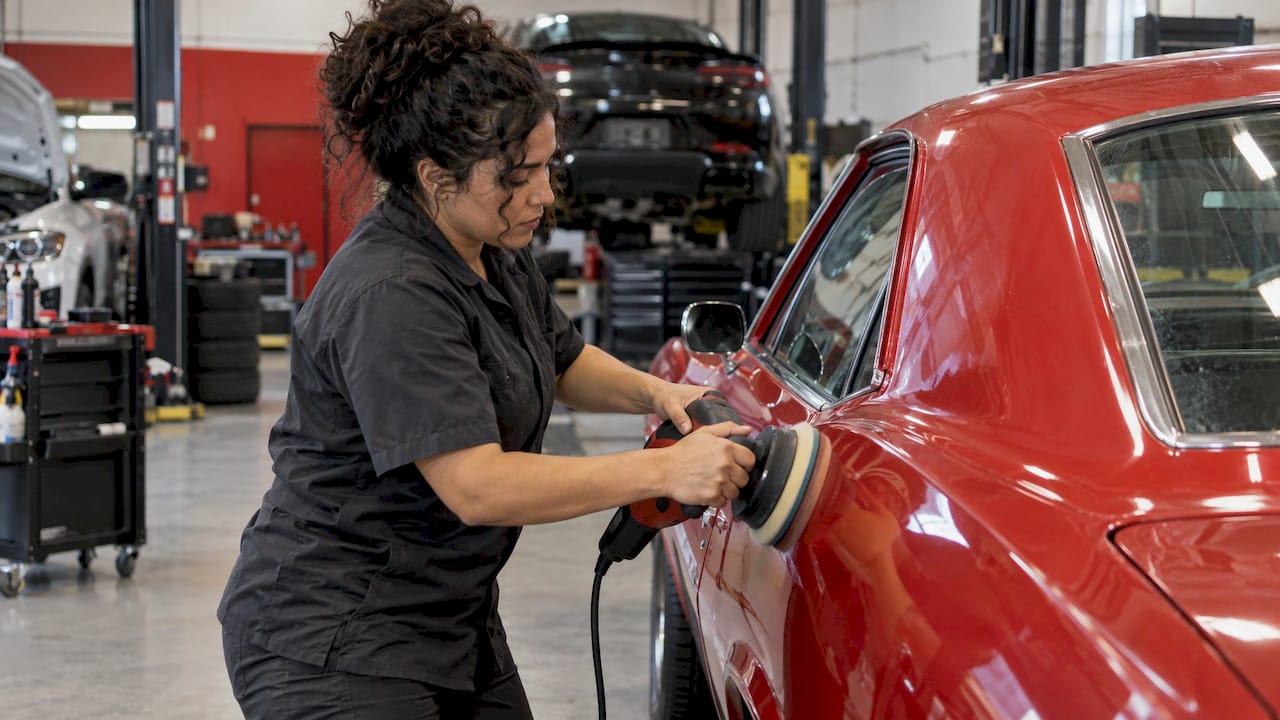
When film is cut to a computer pattern and the edges are wrapped around the panel, the film looks like part of the paint and is harder to peel at the edges. When it is trimmed in place with a blade, it can leave seams and cut risk. More careful finishing takes more hours, and those hours show up in the price.
Warranty and film brand
Premium films commonly carry manufacturer warranties of around 10 years. The conditions vary: some require an authorized installer, some ask for proof of the install date to transfer the warranty to a new owner, and some require registration within a set period after installation or an annual inspection. Ask which of these apply before you sign, and keep the paperwork.
What a full body quote should include
When you collect quotes, get the same details from each so you can compare them honestly:
- Panels covered. A list, not “full body.” Does it include door cups, door edges, rockers, the roof and the rear bumper? Are the mirrors, the A-pillars and the headlights included?
- Film name and finish. Gloss, matte or colored, and which product line.
- Prep. Whether a wash, decontamination and paint correction are included, and how much correction.
- Edge treatment. Wrapped edges or trimmed edges, and whether it is pattern-cut.
- Warranty. The manufacturer’s warranty, the installer’s workmanship warranty, and what you must do to keep them valid.
- Timeline. Full body typically takes several days. Ask when the car will be ready and how you will care for it afterward.
- Aftercare. Wash intervals and the products to avoid in the first weeks while the film cures.
A vague line item is where surprise charges and disappointment come from. A written scope protects you.
Is full body PPF worth it in Phoenix?
Phoenix is a good place to think hard about paint protection. Cars spend much of the year in intense sun and heat, and highway driving between Phoenix, Scottsdale, Mesa, Tempe, Chandler and Glendale means steady exposure to road debris. Film shields the paint from chips and scuffs, and it keeps the clear coat under it from taking the abuse directly.
Whether full body is worth it depends on the car and how long you will keep it.
It makes the most sense when:
- You own a classic, a collector car, a Porsche or an exotic whose original paint matters to its value.
- The car is new, you plan to keep it for years and you want the paint to look new at the end.
- You drive a lot of highway miles, where rocks, bugs and road grit hit more than the front end.
- The car has a finish that is expensive to repaint, such as a specialty color, a matte finish or a restored paint job you just paid for.
- You are preparing a car for sale or auction, where condition and presentation count.
Full front is often enough when:
- The car is a daily driver and most of the damage you expect is rock chips at the front.
- You want strong protection for the first panels that get hit, at a much lower cost.
- Your budget is better split between film, ceramic coating and window tint.
A useful way to decide is to count the repaint cost of the panels you would be protecting. A single repainted panel on a quality finish can cost a meaningful part of the film price, and a respray never perfectly matches factory paint. Film is a way of paying once to keep the factory finish intact.
PPF, ceramic coating and vinyl wrap: which one do you need?
These three get confused because they all change how a car looks and feels, but they do different jobs.
- PPF protects against physical damage: chips, scratches and scuffs. It is the only one of the three built to absorb impacts.
- Ceramic coating adds a hard, glossy chemical layer that repels water and dirt and makes washing easier. It does not stop a rock chip. It can be applied over PPF, which is a common pairing for owners who want both impact protection and easy maintenance.
- Vinyl wrap changes the color or finish of the car. It is thinner than PPF and is chosen for looks first.
If your goal is to protect the paint you have, start with PPF. If your goal is a new color, start with a wrap. If you want easier upkeep on top of either, add a coating.
How long does PPF last?
Quality films carry manufacturer warranties of around 10 years, and results depend on the film, the installation and how you care for it. Sun, heat, washing habits and parking all play a part. Parking in shade or a garage, washing by hand and avoiding harsh chemicals on the edges help the film keep its clarity and adhesion. After a few years, a well-installed film should still look nearly invisible, and light swirl marks in the film can disappear with heat.
Because Phoenix summers are hard on every exterior surface, the install quality matters. Clean edges, correct prep and a well-cured installation give the film the best chance to age well.
Planning your full body PPF in Phoenix
The cleanest way to approach a full body job is to treat it as part of the plan for the whole car. If you are restoring a classic, the film goes on after paint and body work are finished, so the new finish is protected from day one. If you are building a performance car, film is the final step once the work that changes the body, wheels or ride height is done. If you drive a Porsche, you can combine film with correction, ceramic coating and tint in one visit, which keeps the car in one place and one set of hands.
Our PPF packages and how we quote
At StreetWorks Auto in Phoenix, our paint protection film packages include Partial Front at $900 to $1,500 and Full Front at $1,800 to $2,800. For full coverage and for vinyl wraps, we look at the vehicle, talk through your goals and quote the job from there. Our approach is to plan work around the vehicle and the owner’s goals, with attention to Arizona heat and drivability, and because restoration, performance work, Porsche specialization and vehicle protection live in one shop, the film can fit around whatever else your car needs.
If you want a full body quote, or want to know whether full front is the smarter spend for your car, request a PPF quote from StreetWorks Auto with your vehicle, how you use it and what you want to protect.
A worked example: sedan, three ways
Say you buy a new sedan and plan to keep it for eight years. Here is how the choices stack up using the ranges above.
- Partial front at $900 to $1,500. The lowest cost. The bumper, the leading edge of the hood and the fenders and mirrors are covered. The film has a visible edge on the hood, and the doors, rockers and rear stay bare.
- Full front at $1,800 to $2,800. The whole front is covered with no hood line. This is the usual sweet spot for a daily driver that sees mostly front-end damage.
- Full body at the typical $5,000 to $8,000 national range. Everything that takes a hit is covered, including the rockers, door cups and edges and the rear. You pay more up front, and you protect the whole car for the film’s life.
Neither choice is wrong. The right one is the amount of coverage that matches how much of the paint you would regret damaging. A garage-kept weekend car with low miles may not need the rockers covered. A daily driver that is parked in tight lots and driven on the freeway may.
Questions to settle before you book
- How long will you keep the car? Film pays back over years, not months.
- Where is it parked? Shade or a garage reduces exposure. Parking lots and street parking raise door and bumper damage.
- What is the paint worth? A restored classic, a collector Porsche and a custom color finish all justify more coverage than a leased commuter.
- Do you want to add coating or tint? Bundling the work saves trips and lets you plan the order: correction first, then film, then coating, with tint handled alongside.
- When do you need the car back? Full body takes days, so plan around it.
FAQ
Is PPF on a whole car worth it?
For a car you plan to keep, one with valuable or hard-to-match paint, or one that sees a lot of highway driving, full body PPF is worth serious consideration. It protects every panel that takes impacts and keeps the factory finish intact. For a short-term or low-value car, full front often delivers most of the benefit at a lower price.
How much does it cost to PPF your entire car?
Nationally, a sedan typically runs $5,000 to $8,000, an SUV or truck $6,000 to $9,600 and an extra-large vehicle $7,000 to $11,200. The final price depends on film, paint condition and the complexity of the car. We quote full coverage per vehicle at StreetWorks Auto.
Is it cheaper to wrap or PPF a car?
Vinyl is generally cheaper. One report puts quality vinyl at $2,500 to $6,000 against $6,000 to $12,000 or more for full-body colored PPF. The two do different jobs, though: vinyl changes the look of the car, while PPF protects the paint from chips and scratches.
Does PPF replace ceramic coating?
No. They do different things. PPF absorbs chips and light scratches, while ceramic coating adds gloss and makes the surface easier to clean. Many owners use both, with the coating applied over the film.

